The word ‘kunchi’ is a Japanese term for gratitude & hope for another year of agricultural fertility and is often expressed within a ‘matsuri’ – a shinto-led event that involves community participation, or in other words, a festival.
The town of Karatsu on the northern coast of Kyushu has been holding a three day kunchi for around 400 years and is famous for its unique, colourful and very large floats. Called ‘hikiyama’, which translates as ‘massive mountains’, the wooden, lacquered floats weigh-in between 2 and 5 tons and are pulled by a team of bearers up to a hundred strong. Each float represents the district in which it was made and is based on designs ranging from samurai helmets to lions, dragons and other mythical creatures. Floats also carry taiko drummers and flautists who constantly pipe out high pitched, cheerful tunes to help those pulling it along, who in turn encourage themselves with chants of “En-ya! En-ya! En-ya!” as they haul away through the streets of the town (though what the ex-Clannad singer had to do with anything we weren’t sure). It’s immensely colourful, noisy and dramatic, particularly when floats are dragged around corners on the road. Each is swiftly swung around a 90 degree angle and woe betide anyone who gets in the way. In the past people have been hit and killed in this manoeuvre and the authorities have taken to mapping out ‘dangerous corners’ in the scheduled route to mitigate the problem, though it still doesn’t stop the intrepid or stupid from trying to get that perfect photo (not me I might add).
The event starts with an evening lantern-lit display of the floats, progresses to the main second day where a raucous parade around town is punctuated by a dramatic parking ceremony on the local beach, and the last where another, more sedate around-town procession moves the floats to an exhibition centre where they remain until next year. We decided to attend the main day and took the train out to Karatsu along with a good deal of the population of Fukuoka. We soon encountered the start of the parade in full swing, catching sight of the arse-end of a giant red fish bobbing away above the heads of the throng. We avoided the crowds and managed to secure a good vantage point at one end of a bridge before the parade went over it and where no-one could block our view.
The view, as it happened, was wonderful and the vibrancy of the spectacle was something else. Young kids towing parallel ropes were the first to appear, each rope seemingly sporting a hierarchy of bearers, with the kiddies followed by the teenagers and then the men, the real shifters of the weight wearing gloves and sweating profusely. Each district has its own livery and costumes (known as happi coats) varying from the vivid orange, to stylish blue and deep purple with dragon, phoenix and fish emblems sweeping down their backs. The sense of pride with each district team was palpable. Cheer-leaders sat on top of each float and constantly urged the bearers to pull harder and faster, waving flags and punching the air.
The efforts round the streets, however, were nothing in comparison to the beach pulling element that marked the highlight of the day. Each float was brought, in turn, oldest to newest, to a fenced-off area (no longer the town’s actual beach, but a large square coated in thick sand so spectators could gather around it) and turned around so the back faced the crowd. Ropes from the front were re-attached to the rear so the float could be pulled backwards through the sand to a designated parking place. For several minutes before each pull the bearers chanted loudly, egging themselves on, slapping their own faces to psych themselves up further. Then with loud bangs of the drum, heightened flute piping and screaming exhortations from the float-top flag bearers, the pullers ran hell for leather, dragging their floats through the punishingly deep sands. It was clearly a matter of the utmost pride to achieve this in one motion and competition amongst the districts was evidently a huge driving factor. The danger of getting stuck is great, with the tiny wooden wheels of most floats sinking low and barely able to move. All did manage to make it through though, to cheers of obvious pride and clear relief….
Once the fourteenth float was successfully backed-up, the crowd piled into the square (though to be fair it was constantly moving around each parking route as each float was manoeuvred in) and the space became a human sardine-tin. We escaped at this point, but most of the crowd remained as the flag-wavers produced boxes of sweets to throw out to the masses. Kids and adults alike went wild in their efforts to capture the little bags of pink confectionery. Maybe they held secrets unbeknownst to us – good fortune messages, tickets to the sumo wrestling or precious gems maybe. We understood even less on tasting them when a kindly passer-by handed one over. Not sweet at all, but bland, chalky and positively unpleasant. Our tastebuds had clearly not been in Japan long enough to appreciate that particular pleasure.
Forgoing some of the remaining elements of the day (we had a last train to catch), we made our way through the town to the station. Whilst relatively quiet on our arrival, the streets were now awash with festival goers who were nowhere near the beach party and were more intent on filling their faces with garbage from the multitude of street vendors who were lining most of the streets. We’ve never seen as many food stalls in one place before and the sight and smells were both impressive and revolting alike. The air hummed and reeked from a thousand fried food stalls and purveyors of super-sweet teeth-rotting horrors. The culinary world has surely reached its nadir when fried rainbow-cheese is a desirable commodity…. It looked like it had enough e-numbers in it to send you up to space.
We saw just a day’s worth of festivities, but it was enough. Enough to be bowled over by the enormous energy of the effort and the performance of the participants. Despite the crowds and smells and jostling and at times complete chaos, or perhaps because of it, we left enthralled by the spectacle and eager for more. We’d hoped to see a good number of festivals on this trip, thinking they’d provide some real highlights and judging by this one, we were not wrong….
Footnote: The floats are all antiques, with the oldest dating from 1819 and the newest from 1875. The parade is strictly ordered so that the procession starts with the ‘old’ and ends with the ‘new’. Though we couldn’t identify the relevance of each design to the districts of the city that made them, we were able to get a list of them as follows;
The Red Lion (built by the Katana-machi district in 1819)
The Green Lion (built by the Naka-machi district in 1824)
The Turtle and Urashima Taro (Zaimoku-machi district 1841) – Urashima Taro is a character from Japanese folklore who rescued a sea-turtle, was rewarded by a visit to the undersea Dragon Palace for what he thinks is a few days, but is in fact over 100 years. He’s transformed into an old man on opening a forbidden box. There’s gratitude for you….
The Samurai Minamoto Yoshitsune’s Kabuto (battle helmet) (Gofuku-machi district 1844)
The Sea bream / Red Snapper (Uoya-machi district 1845) – this one’s a particular favourite and its image is the poster child for the event in much of the literature. Everyone loves a fat red fish.
The Phoenix-shaped Ship (Oishi-machi district 1846)
The Flying Dragon (Shin-machi district 1846)
The Golden Lion (Hom-machi district 1847)
The Samurai Takeda Shingen’s Kabuto (Kiwata-machi district 1864)
The Samurai Uesugi Kenshin’s Kabuto (Hirano-machi district 1869)
The Drunken Ogre on Samurai Minamoto Yorimitsu’s Kabuto ( Komeya-machi district 1869)
The Lion on an Orb (Kyo-machi district 1875)
The Tiger-Headed Orca (Kako-machi district 1876)
The Boat of Seven Treasures (Egawa-machi district 1876)
Simon (8th November 2025)
Subscribe
6 Comments
Oldest
NewestMost Voted
Inline Feedbacks
View all comments
Guest
Angela M
3 months ago
Amazing photos, what a spectacle! I think I have most affinity with the Drunken Ogre 😆 Sounds like quite an experience and loads of fun. But what the hell is rainbow cheese?!
Thank you – you would have loved it most definitely
Guest
Zoe
3 months ago
Sounds fabuloud despite the crowds, and the floats look to be in amazing condition considering the newest is nearly 150yrs old!!
Definitely not sure about the rainbow cheese but being cheese lovers, has to be tried
We looked it up afterwards and apparently it’s just dyed rubbery cheese. Not quite as exciting as we’d hoped (i.e. that it was made by leprechauns sitting on a pot of gold)


Amazing photos, what a spectacle! I think I have most affinity with the Drunken Ogre 😆 Sounds like quite an experience and loads of fun. But what the hell is rainbow cheese?!
It was a real sight. You’d have loved it. See this for rainbow cheese – not only does it have a picture, it also tells you how to make it!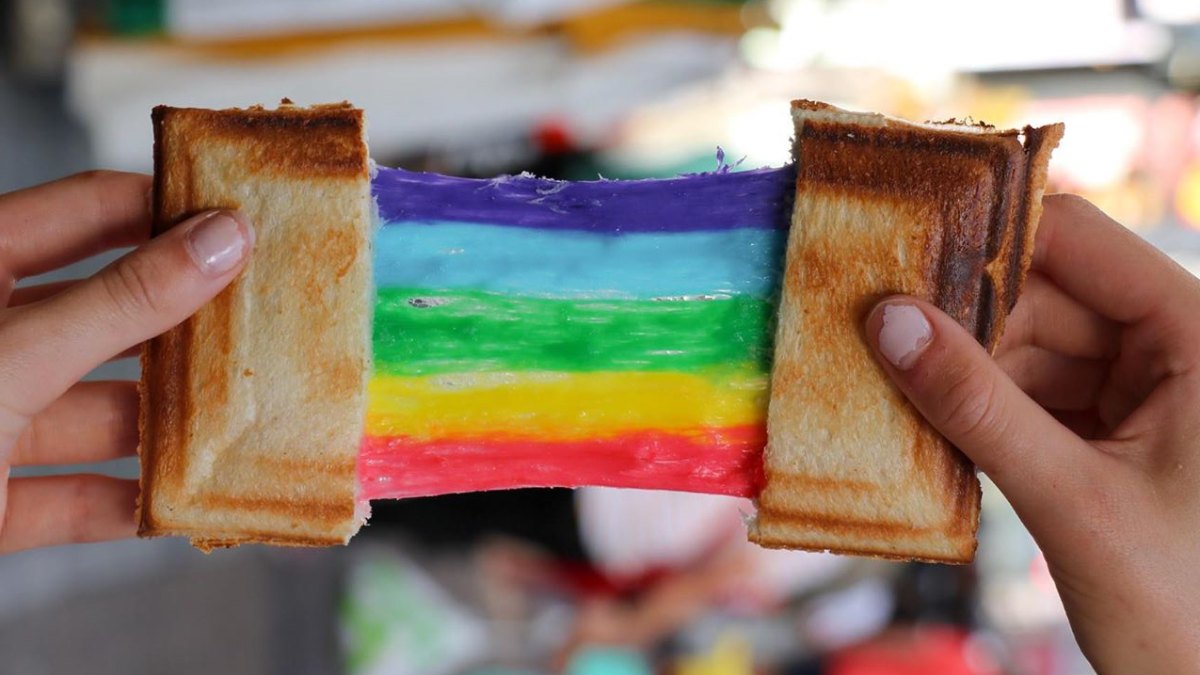
What wonderful photos Simon what a sight i would have loved it. X
Thank you – you would have loved it most definitely
Sounds fabuloud despite the crowds, and the floats look to be in amazing condition considering the newest is nearly 150yrs old!!
Definitely not sure about the rainbow cheese but being cheese lovers, has to be tried
We looked it up afterwards and apparently it’s just dyed rubbery cheese. Not quite as exciting as we’d hoped (i.e. that it was made by leprechauns sitting on a pot of gold)